Tarjuma tul Quran 1st Year Pairing Scheme 2026 is becoming one of the most searched academic resources for students preparing for intermediate exams. The reason is simple. Students want clarity, not confusion. They want to know what to study, how much to study, and which sections carry more weight in the paper.
This 11th class paper scheme helps break down the subject into understandable portions so preparation becomes more focused and less stressful. Instead of reading everything randomly, students can follow a structured approach that actually matches the exam paper design.
The subject itself is meaningful and conceptual, so smart preparation matters more than long hours of unplanned study. And that is where this scheme becomes useful.
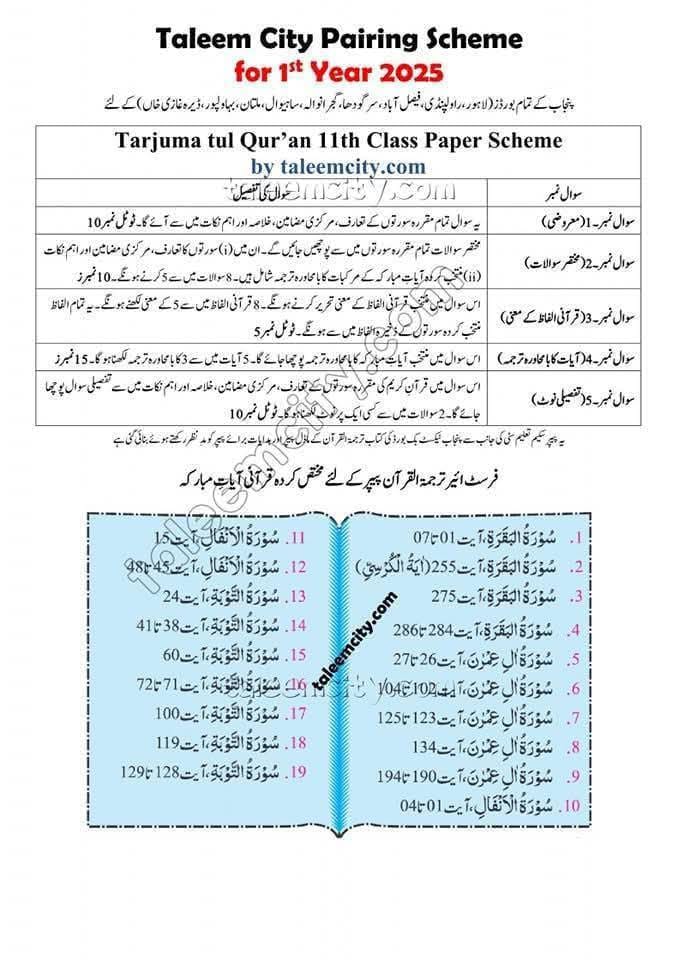
Understanding the Paper Pattern of Tarjuma tul Quran 1st Year
The exam paper is usually designed to test both understanding and translation ability. Questions are not only direct but also conceptual in nature. That means memorization alone is not enough.
Students often notice that some questions repeat in different formats. Others are slightly twisted to check real understanding. Because of this, knowing the paper pattern becomes a strong advantage.
The pairing scheme highlights which topics are more important and how questions are distributed across different sections. This creates a mental map of the paper before even entering the exam hall.
Key Focus Areas in Pairing Scheme 2026
Certain portions of the syllabus always carry more weight. These areas are usually repeated in exams in different forms. Students who focus on these sections often find the paper easier to attempt.
Translation-based questions remain the backbone of the subject. Along with that, meanings of verses and contextual understanding are also frequently tested. Short questions are designed to check clarity of concepts rather than lengthy explanations.
The pairing scheme organizes these topics in a way that makes revision faster. Instead of reading everything again and again, students can prioritize what matters most.
Smart Study Approach Using Pairing Scheme
Preparation becomes much easier when study time is divided properly. A balanced approach works better than random revision.
Start with understanding the translation of important verses. Then move towards short questions that usually come from repeated concepts. After that, practice long questions that require explanation and interpretation.
The pairing scheme helps in identifying this order naturally. It saves time and reduces confusion during revision days.
Some students skip structure and try to cover everything at once. That usually leads to stress and incomplete preparation. A planned method always gives better control over study progress.
How Pairing Scheme Helps in Exam Confidence
Confidence in exams does not come from reading everything. It comes from reading the right things at the right time.
When students know which questions are likely to appear together, preparation becomes more predictable. This reduces anxiety and improves speed during the exam.
It also helps in managing time inside the paper. Easy questions can be attempted first, while difficult ones can be handled later without pressure.
Over time, this approach builds natural confidence because the syllabus no longer feels random or overwhelming.
Revision Strategy Before Exams
Revision plays a major role in this subject. Even well-prepared students lose marks when revision is not structured.
Focus on key translations first. Then revise important meanings and short questions. After that, go through previous exam patterns mentally and try to predict question flow.
Short revision cycles are more effective than long, tiring sessions. A fresh mind always performs better in interpretation-based subjects like this.
Consistency matters more than intensity. A little revision every day creates stronger retention compared to last-minute cramming.
Exam Day Mindset for Better Performance
On exam day, clarity is everything. The paper may look lengthy at first glance, but it follows a pattern.
Start with the questions you are most confident in. This builds momentum and reduces pressure. Do not spend too much time on a single question.
Keep answers clear and relevant. Extra unnecessary writing does not increase marks, but structured answers often do.
Time management becomes easier when preparation has already followed a pairing scheme. It feels familiar rather than new or confusing.